
Tilt Sensor: Why It Matters for Rider SafetyUpdated a month ago
As Foil Drive has evolved, so too have the expectations of riders. One of the most requested safety features from our community was a way to prevent the motor from unexpectedly delivering power after a fall.
The Tilt Sensor was developed to do exactly that.
Its purpose is simple: if your board is no longer in a safe riding position, the motor stops.
This provides an additional layer of protection for both the rider and those around them.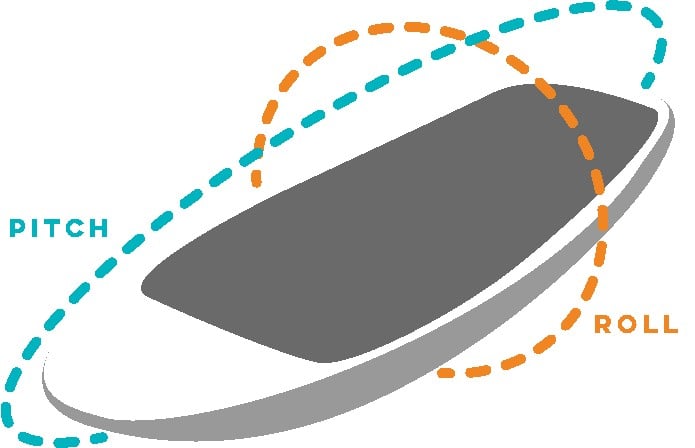
Why was the Tilt Sensor introduced?
A hydrofoil is unlike most other watercraft.
After a fall, the board can:
- Roll upside down.
- Pitch nose-up or nose-down.
- Be pushed around by waves or swell.
- Drift independently of the rider.
The Tilt Sensor helps reduce this risk by automatically disabling motor output whenever the board exceeds the allowable pitch or roll angles you've configured.
How does the Tilt Sensor improve safety?
The Tilt Sensor is designed to reduce the chance of unintended motor operation after a fall or loss of control.
When activated, it:
- Stops motor power if the board rolls or pitches beyond the configured limits.
- Prevents the motor from immediately restarting while the board remains in an unsafe orientation.
- Requires the rider to intentionally regain control before applying throttle again.
This means the rider—not the board—decides when power is reapplied.
An additional layer of protection—not a replacement for safe riding
The Tilt Sensor is an additional safety feature.
It does not replace safe riding practices, including:
- Wearing an appropriate leash where suitable.
- Maintaining a safe distance from other water users.
- Riding within your ability.
- Following local regulations and surf etiquette.
Like every safety feature on a Foil Drive, the Tilt Sensor is designed to reduce risk—not eliminate it.
Why do I need to release the throttle after a fall?
If the Tilt Sensor activates while you're holding the throttle, the controller requires the trigger to return completely to zero before the motor can restart.
This is intentional.
Imagine falling from your board while still squeezing the trigger. If the motor restarted the instant the board became level again, it could unexpectedly accelerate before you've regained control.
Requiring the throttle to be released ensures the rider deliberately commands the motor to start again.
Can I adjust how sensitive the Tilt Sensor is?
Yes.
The pitch and roll angles that trigger the Tilt Sensor are configured in the Foil Drive App.
Different riding styles and conditions may benefit from different settings.
For example:
- A beginner may prefer more conservative settings for additional protection.
- An experienced rider in large ocean swell or downwind conditions may require greater allowable movement before the motor is disabled.
The V3 Controller simply allows you to enable or disable the Tilt Sensor. All sensitivity adjustments are made in the Foil Drive App.
Should I turn the Tilt Sensor off?
For most riders, Foil Drive recommends leaving the Tilt Sensor enabled.
It provides valuable protection if you lose control of the board and helps prevent unintended motor operation while the board is in an unsafe orientation.
There may be specialised situations where experienced riders choose to temporarily disable the Tilt Sensor, or adjust the allowable pitch and roll angles to better suit the conditions. If you find the Tilt Sensor is activating more often than expected, consider reviewing your settings in the Foil Drive App before disabling the feature entirely.
Understanding the Balance Between Safety and Performance
Every rider has different goals.
Some prioritise maximum freedom of movement for advanced riding, while others prefer additional safety when learning.
The Tilt Sensor allows you to tailor that balance through the Foil Drive App, while still providing a simple on/off control directly from your V3 Controller.
The goal isn't to interfere with your session—it's to provide an extra layer of confidence when things don't go to plan.
Best Practice
Foil Drive recommends:
- Keeping the Tilt Sensor enabled for everyday riding.
- Configuring pitch and roll limits appropriate for your experience and conditions.
- Testing your settings in a safe, open environment before heading into more challenging conditions.
- Understanding how the Tilt Sensor behaves before relying on it during your first session.
Like all safety features, the Tilt Sensor is most effective when riders understand how it works before they need it.